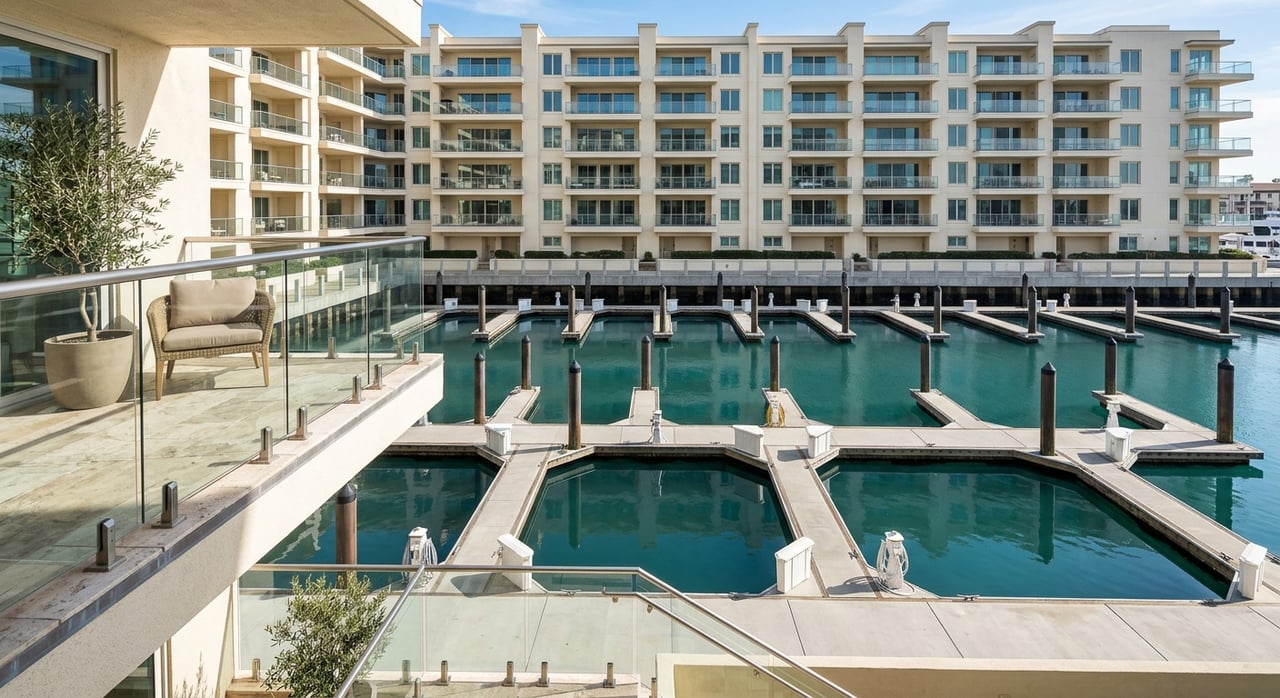
If you are shopping for a Marco Island condo because you want easy boating access, here is the truth: the view from the balcony tells you almost nothing about what you can actually do with a boat. Slip rights, guest docking, boat size limits, and maintenance costs often depend on the condo documents and local waterfront rules, not the listing description. If you want to avoid surprises after closing, you need to know where the real answers live. Let’s dive in.
Why HOA and marina rules matter
On Marco Island, marina and condo rules can shape how you use the property just as much as the floor plan or water view. You may find two waterfront condo buildings that look similar from the outside but operate very differently when it comes to slips, storage, and boating access.
That is because the controlling rules usually come from the condominium’s recorded declaration, bylaws, and current association rules. Florida law requires associations to maintain these records, and buyers are entitled to review key documents before closing, including the declaration, articles, bylaws, rules, budgets, financial statements, and certain reserve and inspection materials.
If dock or marina facilities serving the condo required state or local approval, that approval, or a statement that no approval was obtained, must also be disclosed. For buyers who care about boating access, this is a major part of due diligence.
What documents control your boating rights
The most important thing to understand is that there is no one-size-fits-all, island-wide condo marina rulebook. On Marco Island, boating rights are usually building-specific.
Your answers are most likely found in these documents:
- The recorded declaration and any amendments
- The bylaws
- The current association rules
- The current budget and annual financial statements
- The most recent reserve study
- Any milestone-inspection summary, if applicable
- Any management agreement, lease, or marina-related contract affecting the property
These records can help clarify who may use a slip, whether a slip transfers with the unit, whether guests can dock, whether live-aboard use is limited, and who pays for repair or replacement.
Slip ownership is not always simple
One of the biggest points of confusion for condo buyers is the slip itself. A slip may be owned, leased, assigned, or treated as a limited common element, depending on the declaration for that specific condominium.
Under Florida law, a limited common element is a common element reserved in the declaration for the exclusive use of certain units. The same declaration may also assign maintenance responsibility either to the association or to the unit owner. In practical terms, that means one Marco Island condo may include a slip right that stays tied to the unit, while another may treat the slip more separately.
This is why you should never assume a boat slip works the same way from one building to the next. The legal setup affects use, transfer rights, upkeep, and your long-term costs.
Boat size limits involve more than HOA rules
Many buyers focus only on the association’s stated boat-length rule. That is important, but it is not the full picture.
On Marco Island, the practical boat limit is often the smaller of two things: the condo association’s slip rules and the local waterfront constraints. City ordinance materials show that boat-docking facilities are regulated by factors such as waterway width, setbacks, and dock protrusion standards.
That means a boat could fit within the association’s written size rule and still run into a local physical or regulatory limitation. New docks or dock extensions must also consider seagrass or seagrass beds within 200 feet of the proposal, and city materials state that boat-docking facilities must comply with state and federal permit requirements.
Why local dock geometry matters
Marco Island’s waterfront code is not just about appearance. It is also about geometry and environmental review.
City ordinance materials describe width-based protrusion limits and side-yard setback requirements for boat docking facilities. For you as a buyer, that means the usable fit of a vessel can be affected by how the dock is positioned, not just by the listed dimensions of the slip.
In plain terms, a larger vessel may seem workable on paper but still create issues because of protrusion or setback standards tied to that property. That is one reason experienced, property-specific review matters so much in this market.
Guest docking and temporary tie-ups
If you plan to have friends or family visit by boat, do not assume guest docking is automatically allowed. Condo associations may address guest use, waitlists, temporary tie-up rights, and marina behavior in their current rules or related contracts.
Marco Island also prohibits mooring a vessel at a property owner’s dock, mooring, piling, or seawall without the owner’s consent. For condo buyers, that matters because access rights are not automatically shared just because the building sits on the water.
This is especially important in communities where slips are limited, assigned, or controlled by specific use policies. A quick verbal answer is not enough. You want the current written rule.
Can the association change the rules later?
Yes, associations can adopt reasonable rules, and rules may change over time. Florida law requires 14 days’ notice before a meeting that will consider an amendment to rules regarding unit use.
For buyers, that means older marketing remarks or informal statements from years ago may not reflect the current reality. Boat access, guest use, storage rules, and marina conduct standards can evolve, so the latest official records matter most.
If boating is a top priority for you, ask not only what the current rules are, but also how the association handles amendments and enforcement. That gives you a better sense of how predictable the experience may be after closing.
Marco Island and Collier County restrictions
Your condo documents are only part of the equation. On-water use can also be affected by local restrictions in Marco Island and Collier County.
Collier County’s waterways ordinance includes slow-speed, minimum-wake boating-restricted areas and vessel-exclusion zones where applicable. There is also a separate layer involving manatee-protection zones, and Collier County is one of Florida’s approved manatee-protection-plan counties. Those plans are used when reviewing permit applications for new or expanding boat facilities.
For condo buyers, the takeaway is simple: even if a slip is available, your boating experience may still be shaped by county and local waterway rules tied to that area.
A smart due-diligence checklist
If you are serious about buying a Marco Island condo with boating access, a focused document review can save you time, money, and frustration. Start with the records most likely to answer the questions that matter to your lifestyle.
Use this checklist as a guide:
- Review the current declaration and all amendments
- Review the bylaws and current association rules
- Confirm whether the slip is owned, leased, assigned, or a limited common element
- Verify whether the slip right transfers with the unit
- Ask about waitlists for slip use or transfer
- Confirm guest docking and temporary tie-up rules
- Check any vessel length, beam, height, or configuration limits stated in the documents
- Review maintenance and insurance responsibility for slips and related structures
- Review the current budget, annual financials, reserve study, and any milestone-inspection summary if applicable
- Check for any marina-related contracts, leases, or management agreements affecting use
- Ask whether any city or county permit conditions affect the marina or dock facilities
This level of review is especially important if you are buying remotely or comparing several buildings at once. Small differences in document language can lead to very different ownership experiences.
Questions to compare condo buildings
When you compare Marco Island condos, focus on the questions that reveal how boating access really works in each community. The goal is not just to find a unit on the water. It is to find a property that fits the way you actually plan to use your boat.
Here are some of the most useful questions to ask:
- Is the slip tied to the unit, or treated separately?
- Who controls slip assignment or transfer?
- Are there waitlists for owners or guests?
- What vessel limits apply?
- Who is responsible for repairs and upkeep?
- Are there restrictions on guest use or temporary docking?
- Are any city, county, or permit conditions affecting dock use?
- Can the association change the relevant use rules after purchase?
On Marco Island, the answers are usually property-specific rather than island-wide. That is why careful review matters more than assumptions.
Why expert local guidance helps
Waterfront condo purchases can look straightforward until the marina details come into focus. Once slip rights, local dock standards, and association records enter the picture, the transaction becomes much more specialized.
That is where local marina knowledge can make a real difference. When you work with a team that understands both condo governance and boating logistics, you are better positioned to ask sharper questions, compare the right buildings, and move toward closing with confidence.
If you are exploring waterfront condos or slip opportunities on Marco Island, The Sprigg Group brings boutique guidance, marina-level knowledge, and concierge support designed for buyers who want their boating lifestyle to work as smoothly as their real estate purchase.
FAQs
What documents should you review for a Marco Island condo with a boat slip?
- You should review the declaration and amendments, bylaws, current rules, budget, annual financials, reserve study, any milestone-inspection summary if applicable, and any marina-related contracts or agreements affecting the property.
Can a Marco Island condo association change boat-use rules?
- Yes. Florida law allows associations to adopt reasonable rules, and rule changes regarding unit use require advance meeting notice, so current documents are more reliable than older marketing information.
Does a boat slip always transfer with a Marco Island condo unit?
- No. A slip may be owned, leased, assigned, or treated as a limited common element, depending on the condominium’s declaration.
Are Marco Island boat size limits based only on condo HOA rules?
- No. Boat size can also be affected by local standards such as waterway width, setbacks, dock protrusion limits, and other waterfront constraints.
Can guests dock their boats at a Marco Island condo marina?
- Possibly, but guest docking is building-specific and should be verified in the current association rules or related contracts.
Why is Marco Island condo marina due diligence so important?
- Because boating rights, slip transfer rules, maintenance costs, and local waterfront restrictions can vary from one building to another, even when the condos appear similar.